Patients share their experiences of living with cancer
24 November 2025
Patients Can't Wait
Our commitment to the patient community
We work hard to discover and develop medicines and vaccines that help fight some of the world’s most serious health concerns. And it’s critical that we understand, respect and honor the life experiences of patient communities — your voice is important to us. That’s why we listen to patients and take into account your opinions and perspectives when making business and research decisions.
We put patients at the center of everything we do
We encourage patient communities to become their own health advocates, make informed decisions and be partners in engaging with the health care system.
AU-NON-00719 Updated November 2025
Celebrating the freedom to be ourselves
MSD recognises Pride Month and our LGBTQIA+ community in June and beyond
November 18, 2025
Share this article
As Pride Month is recognised around the world, we are celebrating the diversity of our colleagues in our own unique way and will come together at the end of June for company-wide events across the organisation.
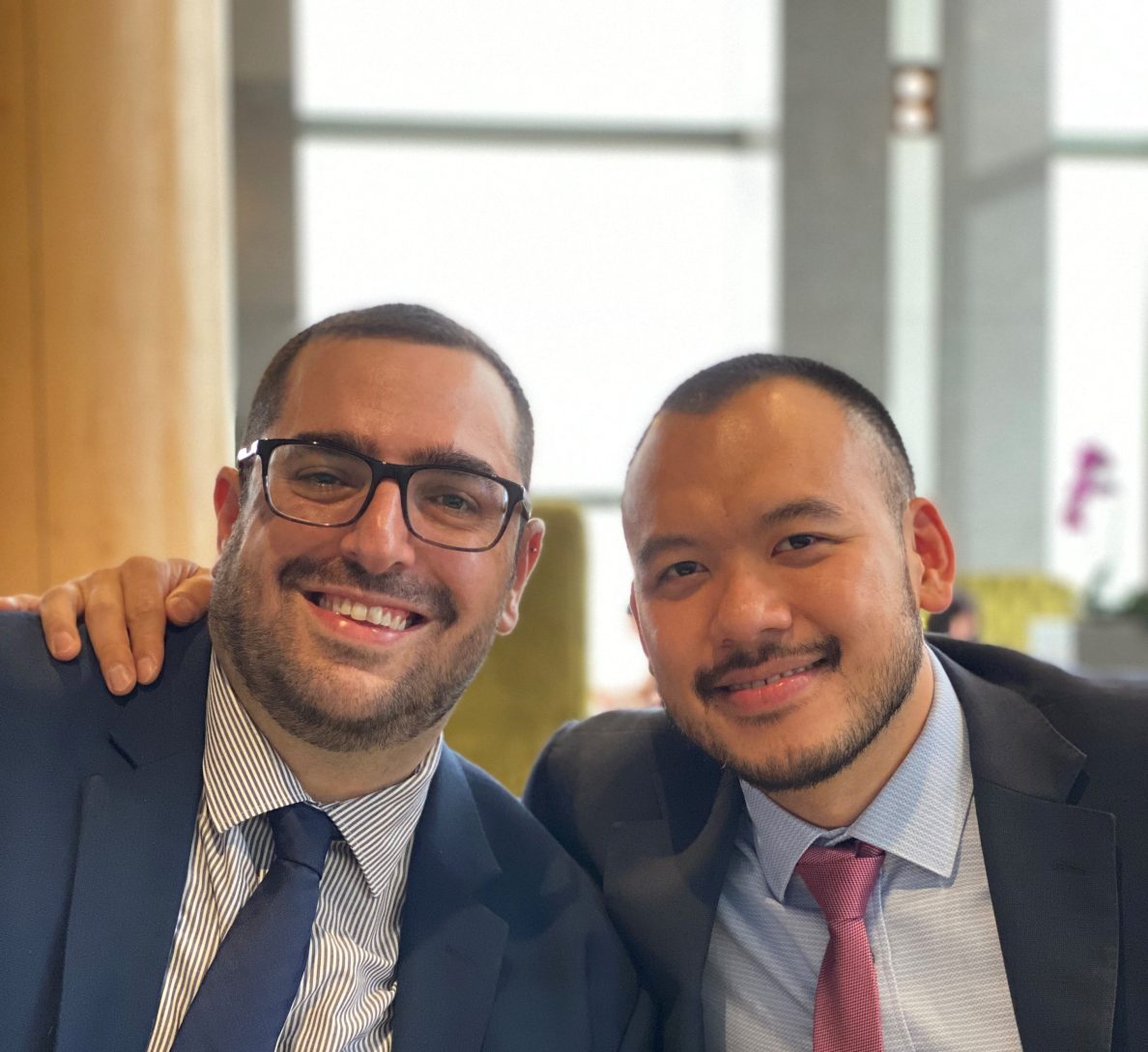
Led by the co-chairs of the Australian and New Zealand chapter of MSD’s Rainbow Alliance, Martin Tanudjaja and Theo Orfanos from the Global Clinical Trials Operations team – self-described as a “couple who work together”- are passionate about their leadership of the Rainbow Alliance and about recognising Pride beyond June.
“Working in an accepting environment allows everyone to excel. Through our involvement with the Rainbow Alliance, we are looking to foster an already present level of acceptance at MSD Australia and New Zealand, where everyone has the psychological safety to be themselves and be able to bring their whole self to work,” says Theo.
Martin and Theo lead an 18-strong Rainbow Alliance group, which meets monthly to discuss initiatives and raise issues, with the aim to quickly resolve any concerns or unintended misconceptions related to the LGBTQIA+ community in the workplace. Ultimately, it is a safe space for any employee to ask questions or for help, break down barriers and challenge societal stigmas in a respectful manner.
“At MSD, we already operate within a global community – we all come from different backgrounds, from all walks of life. It’s important that everyone we work with are proud to be our colleagues and celebrate the diversity we contribute to the work we do."
Theo Orfanos
A diverse and inclusive workforce inspires innovation and is fundamental to our company’s success. Having an environment comprised of people from different dimensions of diversity also helps us better understand the unique needs of the customers, health care providers, communities and patients we serve.
As Martin says, “Our company has an impact on the lives of patients, so it’s important for patients to know that our company truly values people for who they are.”
Why parental leave needs to be accessible to all parents
October 31, 2025
Share this article
We are proud of our Parental Leave Policy that enables all parents at MSD to access Parental Leave regardless of their caregiver-status. Our Policy allows colleagues to take paid parental leave flexibly to suit the different needs of parents and their families. Our equitable Parental Leave policy is an important component of our commitment to gender equality both within and outside the workplace.
Our enhanced Parental Leave policy has been in place for nearly a year, and we are proud to hear of the impact that this policy has on our employees.
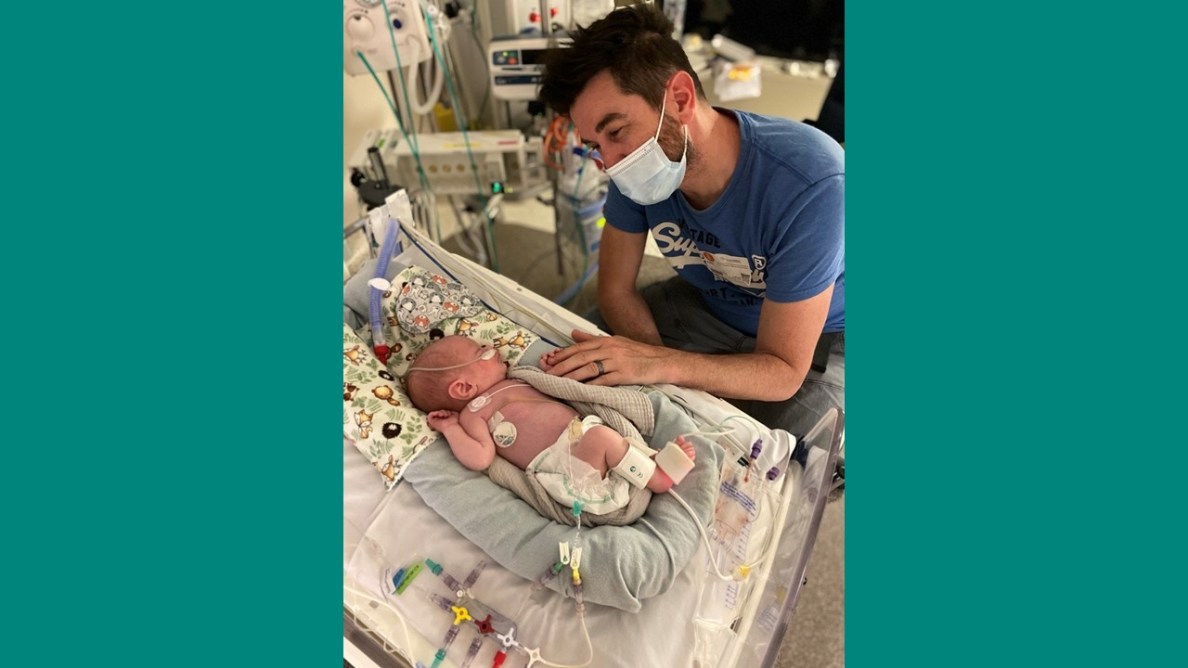
Dave Cushing, IT Site Lead at our MSD manufacturing facility in Bendigo, was particularly relieved to experience the real-life impact of the parental leave provisions that he was able to access at a very difficult time for his family, as he and his wife Jo welcomed their second son, Sully.
Dave and Jo’s Story, Welcoming Baby #2
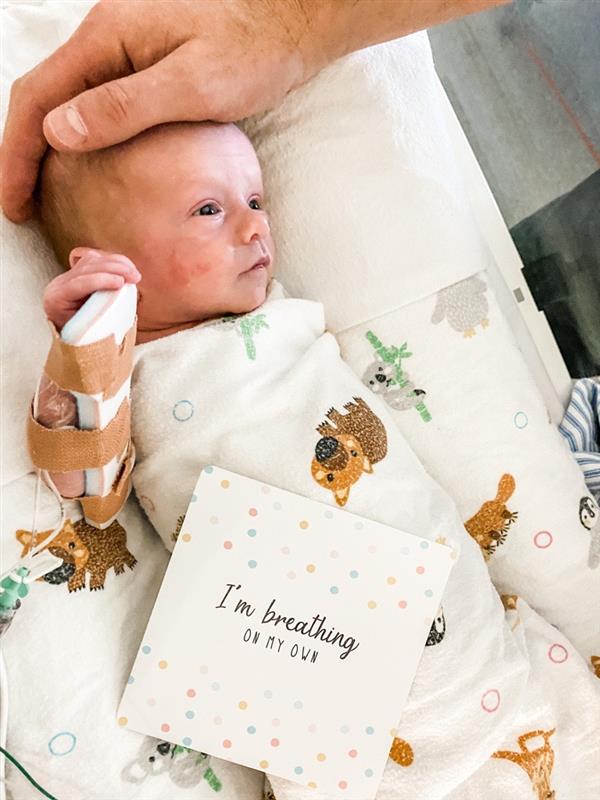
Dave & Jo’s second child Sully had a challenging welcome into the world. Early on in pregnancy, Dave and Jo discovered their baby had some kidney issues and required regular scans. Later in the pregnancy, Jo’s 36-week scan indicated significant abnormalities, and their lives were quickly turned upside down. Sully was diagnosed with Congenital Diaphragmatic Hernia, impacting roughly 1 in 2500 births in Australia per year, with roughly a 20-30% mortality rate. Doctors requested that Jo and Dave immediately relocate to Melbourne (a 2 hour drive from home) to be near the critical care that would be required for Sully. At birth, Sully required resuscitation, emergency surgery and significant care in the RCH NICU. Following his surgery, it was not known what his prognosis would be, and how long he might need specialised extended care.
Throughout this scary time as they began to face this devastating diagnosis and the move away from home, Dave felt comforted knowing that one thing he would not have to worry about was receiving support from his leader and team as he started a leave of absence.
“It was no question in my mind that MSD would be there for me, to support me and my family.”
While Sully remained in NICU, Dave began thinking about what type of parental leave he would be eligible to take and what other types of leave he could use if Sully required extended care. When a teammate reminded him about MSD’s 12-week flexible parental leave policy, Dave recalls becoming teary, and the feeling of relief that had the time and space to deal with whatever is coming without worrying about whether he had enough leave.
Dave’s Parental Leave
Carer's leave
5 weeks
Throughout their stay in Melbourne, Dave was able to take carer’s leave for the period of Sully’s birth and NICU stay.
Full-Time Paid Parental Leave
6 weeks
When they returned home from Melbourne, Dave utilised full-time Parental Leave to settle back into home with Jo and their growing family.
Part-Time Paid Parental Leave
12 weeks
Dave felt he wanted to continue to be present for his family as they continued to adjust as a family of four. Dave decided to take the remaining eligible paid parental leave part-time. This allowed Dave to be caring for Sully and Hudson (2 years old) in the mornings and working in the afternoons as he eased back into work while remaining present with his family.
Through this time returning to work, Dave felt supported by MSD through all stages. He was able to embrace as he calls it: “ultimate flex”, adapting his work style to suit his growing family.
The importance of equitable Parental Leave
“MSD doesn’t just talk about caring for people. The company’s policies and values are reflected in actions. MSD is genuinely interested in the welfare of their people” Dave Cushing, Proud Dad
Dave reflects that it is great to see the equal recognition of parenting at MSD, acknowledging the role of Dads and non-birthing partners in parenting, which enabled him to spend valuable time with his growing family.
Parental Leave doesn’t only impact the employee taking leave. The benefits of flexible, equitable paid parental leave extend to the employees family and community. For Jo, it was a welcome relief that Dave had the opportunity to spend time with family, as well as the assurance that his income would not be affected during an already challenging time with Sully, a young Hudson, all in the midst of the COVID lockdown.
“I felt relieved,it was such a weight off my shoulders knowing that we could just focus on Sully. Even after he left the NICU, he was still requiring a high level of care. I don’t know how I would have coped if Dave wasn’t around”. Jo Cushing
AU-NON-00755 Updated October 2025
Flexible parental leave, a dad's story at MSD
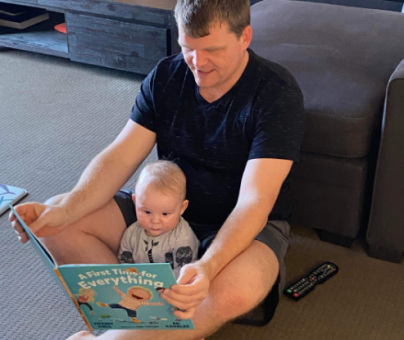
Dylan and his son Ted
We are proud of our parental leave policy that enables all parents at MSD to access parental leave regardless of their caregiver-status. At MSD, our colleagues can take paid parental leave flexibly to suit the different needs of them and their families. Our equitable parental leave approach is an important component of our commitment to gender equality both within and outside the workplace.
Our enhanced parental leave has been in place since 2021, and we are proud to hear of the impact that this has on our employees.
Dylan Stanyer, Production Lead Technician at our MSD manufacturing facility in Bendigo, has been able to make use of the policy in order to meet the needs of his family as they navigate parenthood.
Dylan and Jordy’s story – from one to three kids
Dylan shares that when he and his wife Jordy decided they wanted to start a family, there were plenty of unknowns. He shared, ‘to prepare myself as best I could, I began reading heaps for the first time since leaving school. Not the typical what to expect… type of books, but autobiographies by professionals who were also fathers.’
At first, Dylan chose to utilise full-time paid parental leave 2 weeks before and 2 weeks after the due date, to suit the nature of his role. ‘I could be in cleanrooms and not as readily accessible as one would hope to be with a baby arriving any day.’
‘Looking back to our first child we were lucky enough to welcome Theodore (Ted) in our lives close to his due date. The first few weeks were great to spend as a family, finding a routine that worked for us before I returned to work, soaking in the moments as he developed.
I returned to full time work for the following 6 months, thankfully only a handful of sleepless nights over that time and many colleagues supported me in ensuring I wasn’t spending too much excess time on site for the non-urgent issues.’
Part-time paid parental leave
Today in order to look after their three children, Dylan and Jordy use their paid parental leave on Mondays, creating a three-day weekend. “Having Mondays has been a game-changer,” Dylan says. “We can be productive and social on weekends, then really be a family on Monday.”
Dylan is continuing a four-day week through 2026, staying connected with his team and stretching hours when processes need it. Flexible arrangements are more accepted, and his early starts mean he can do daycare pickup four days a week and be home for late afternoons and evenings.
Home life is busy in the best way: early mornings with Frankie (usually with Disney songs), feeds with Trixie, and Lego with Ted, especially anything with wheels. Sleep is variable, but “you take what they let you have.”
Switching off from work has improved. A dedicated work phone helps protect family hours, though he’ll clear small tasks on weekends to stay ahead. Lists (upon lists) and caffeine keep things moving.
Ted took to being a big brother well, the focus now is joining him in imaginative play and looping in Frankie.
Dylan’s updated advice for expectant non-birthing parents: enjoy the quiet when you find it, and anchor a family day if you can. “Mondays give us space to reset, be present, and make memories. Don’t be nervous about taking leave, the team will adapt, and the time is precious.”
He’s grateful for the support around him: “My direct team of Arlene, Ayon, and Jacinta along with my manager Chris have been supportive and encouraging,” he says, extending thanks to the Bendigo Production team for backing flexible work and family-first choices.
AU-NON-00908Updated February 2026
Understanding renal cell carcinoma
May 3, 2022
Share this article
What is renal cell carcinoma?
Kidney cancer is a cancer that starts in the cells of the kidney.1 Around 9 out of 10 kidney cancers are renal cell carcinoma (RCC). In the early stages of RCC the tumour is in the kidney only but as the cancer grows it can spread to other parts of the kidney and other parts of the body like the lungs or bones.1
Around
4,300
people in Australia were diagnosed with kidney cancer in 2021.*
Some of the risk factors for kidney cancer include:1
Age (60+)
Smoking
Obesity
High blood pressure
Kidney failure
Family history
Inherited conditions
Exposure to toxic substances at work
Early detection & treatment
Most people with RCC do not have obvious symptoms and their cancer is discovered incidentally on imaging. This means that RCC is sometimes not found until the cancer is advanced. 2,3
Despite improvements in RCC diagnosis and treatment over the past two decades, it remains a serious urological malignancy. 4
If the cancer spreads or returns?
In the past five years, treatments for advanced RCC have evolved, including combination therapies, providing more options for patients.5,6
If you or a loved one are concerned about kidney cancer or renal cell carcinoma, it is important you talk to your doctor or healthcare team.
You can visit Cancer Australia for more information on the above statistics.
Capitanio, Umberto et al. “Epidemiology of Renal Cell Carcinoma.” European urology vol. 75,1 (2019): 74-84. doi:10.1016/j.eururo.2018.08.036
Ged, Y. et al 2020, Nature Reviews Urology, ‘Advanced renal cell carcinoma and COVID-19 — a personal perspective’, vol. 17, pp. 425-427, DOI: https://doi.org/10.14740/wjon1279.
Schmidt, A. 2019, Asia-Pac J Clin Oncol, ‘Treatment selection for first-line metastatic renal cell carcinoma in Australia: Impact of new therapy options’, vo. 15, suppl. 10, DOI:10.1111/ajco.13289.